
News
0.9 Bar or 1.1 Bar? The Critical Physics Behind a Reliable Radiator Cap
A 0.9 bar or 1.1 bar radiator cap is a precision pressure relief valve, not just a lid. Learn how pressure ratings raise the boiling point and prevent collapsed hoses.
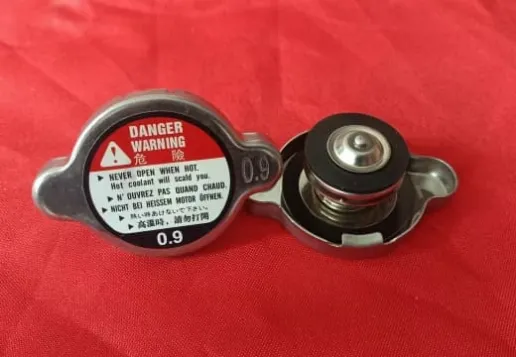
In the high-stakes world of engine maintenance, it is often the smallest components that carry the heaviest responsibility. The radiator cap is a prime example. While it may appear to be a simple lid, it functions as a precision-engineered pressure relief valve that dictates the efficiency of the entire engine cooling system.
For professionals in the automotive aftermarket, understanding the technical nuances of these caps is essential. A mismatched or inferior cap doesn’t just leak, it can lead to catastrophic engine failure. Let’s look at the engineering that separates a standard cap from a high-performance safety component.
Why Does the Pressure Rating Actually Matter?
The primary job of a radiator cap is to raise the boiling point of the coolant. By keeping the system under pressure, the coolant can reach temperatures well above 100°C without boiling, which allows for more efficient heat transfer from the engine blocks.
Most modern vehicles require a 1.1 bar radiator cap, while many older models or specific Asian makes utilize a 0.9 bar rating.
The 1.1 Bar Advantage: Designed for high-performance and modern compact engines, it maintains a higher boiling point, ensuring the engine stays cool under heavy loads or in high-ambient temperatures.
The Risk of Mismatch: Installing a 1.3 bar cap on a system designed for 0.9 bar can lead to burst radiator hoses or heater core leaks, as the older gaskets and seals cannot withstand the added stress.
What Makes a Quality Radiator Cap?
The Material Science: EPDM vs. Standard Rubber
When sourcing aftermarket radiator caps, the secret to longevity lies in the seal. Constant thermal cycling, moving from freezing overnight temperatures to 120°C during a drive, is brutal on elastomers.
Quality caps utilize EPDM (Ethylene Propylene Diene Monomer) gaskets. Unlike standard nitrile rubber, EPDM remains flexible and vapor-tight even after thousands of heat cycles. It resists the chemical degradation caused by modern long-life coolants and prevents the sticking that often occurs with cheaper materials. If the seal fails, the system loses pressure, the boiling point drops, and the engine begins to overheat almost immediately.
The Two-Way Valve Logic: Pressure and Vacuum
A precision-made cap must perform two distinct mechanical functions:
Pressure Relief: When the coolant expands due to heat, the main spring compresses at the rated pressure (e.g., 1.1 bar), allowing excess coolant to flow into the expansion tank.
Vacuum Return: As the engine cools down, the coolant shrinks. A small vacuum valve in the center of the cap must open easily to allow coolant to be sucked back into the radiator.
If the vacuum valve is made from low-grade, rust-prone metal, it will seize. This results in the collapsed hose syndrome, where the atmospheric pressure literally crushes the radiator hoses because the cap failed to let fluid return. Our focus remains on stainless steel internal springs to ensure these valves never seize, regardless of road salt or humidity.
Identifying Quality in the Aftermarket
For wholesalers and distributors, the reliability of a radiator cap is measured by its fit and forget quality. High-quality OE replacement caps should feature:
Deep-stamped pressure ratings on the shell for easy identification.
Reinforced stainless steel housings to prevent structural deformation.
Precision-calibrated spring tension that has been bench-tested for accuracy.
Summary
In the automotive cooling system, precision is the only standard that matters. Whether you are managing a fleet or supplying a retail network, prioritizing the technical specifications of a radiator cap ensures that the vehicles stay on the road and out of the repair shop.
Is your inventory optimized for the latest vehicle fitments? Understanding the bar ratings and material standards is the first step toward providing a seal of confidence to your clients.
Need radiator caps in 0.9 bar or 1.1 bar? Contact us for specifications and wholesale pricing.