
News
The Four Main Risks of Incorrect Operation for Starting a Car
Incorrect jump starting can damage your car's electronics, explode the battery, melt cables, or cause electric shock. Here are the four main risks — and the three rules to always remember.
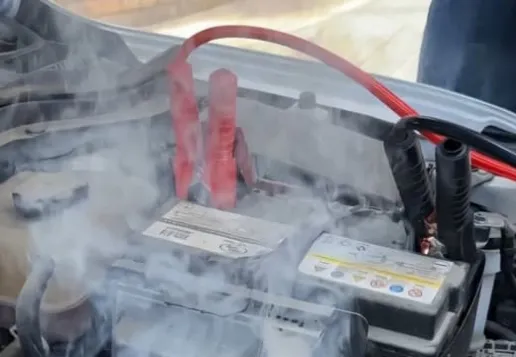
Jumper cables are essential for starting a car with a dead battery, but incorrect operation can cause expensive damage and even personal injury. Here are the four main risks:
1. Damage to Electronic Components
Modern cars are equipped with complex ECU(Electronic Control Units) and sensitive electronic systems. If the positive and negative terminals are connected incorrectly (reverse polarity), it creates an instant power surge. This can fry the ECU, alternator, audio system, sensors, and blow fuses throughout the vehicle.
2. Battery Damage or Explosion
Incorrect usage can cause an internal short circuit within the battery, generating immense heat. Lead-acid batteries release hydrogen gas, if sparks occur during connection - especially if the negative cable is clamped directly to the dead battery's negative terminal, it can ignite the gas. This may cause the battery to explode, spraying acid that causes burns to skin and eyes, and vehicle paint.
3. Melting Cables and Fire Risk
Using jumper cables with too small a wire gauge, a short circuit or connecting them to a non-starting vehicle for a long time, will cause the wires to overload and heat up. The melted insulation layer may lead to vehicle spontaneous combustion, destroying the cables and potentially burning the user.
4. Electric Shock Hazard to Personnel
Direct contact with the metal connectors of jump leads with hands during operation, or smoking/using open flames near the battery, may not only cause electric shock due to leakage but also ignite the hydrogen leaked from the battery, resulting in burns, electric shocks, and other accidental injuries.
Always remember:
- 12V to 12V, 24V to 24V. Please do not use new energy vehicles to jump-start gasoline cars.
- Red first and Red to Red (Positive), Black to Metal(Negtive to Ground). When connecting the negative cable, clamp it to an unpainted metal part of the engine or chassis on the dead car, not directly to the negative battery terminal.
- Start the rescue vehicle and let it idle, then attempt to start the vehicle with a dead battery. Sometimes, idle is not enough.